Assisted Reproductive Technology Market Size, Share & Trends Analysis Report By Procedure (In Vitro Fertilization (IVF), Artificial Insemination (AI)), By Technology (Instruments and Equipment, Software and AI Solutions, Accessories and Disposables, Culture Media), By End User (Fertility Clinics and Specialized Facilities, Hospitals and Other Medical Settings) and By Region (North America, Europe, APAC, Middle East and Africa, LATAM) Forecasts, 2026-2034
Assisted Reproductive Technology Market Size & Growth Analysis
The global assisted reproductive technology market size is valued at USD 31.63 billion in 2025 and is estimated to reach USD 80.58 billion by 2034, growing at a CAGR of 10.95% during the forecast period. The remarkable growth of the market is fueled by the integration of blockchain technology in ART ensures secure patient data management and transparent treatment records.
Key Market Trends & Insights
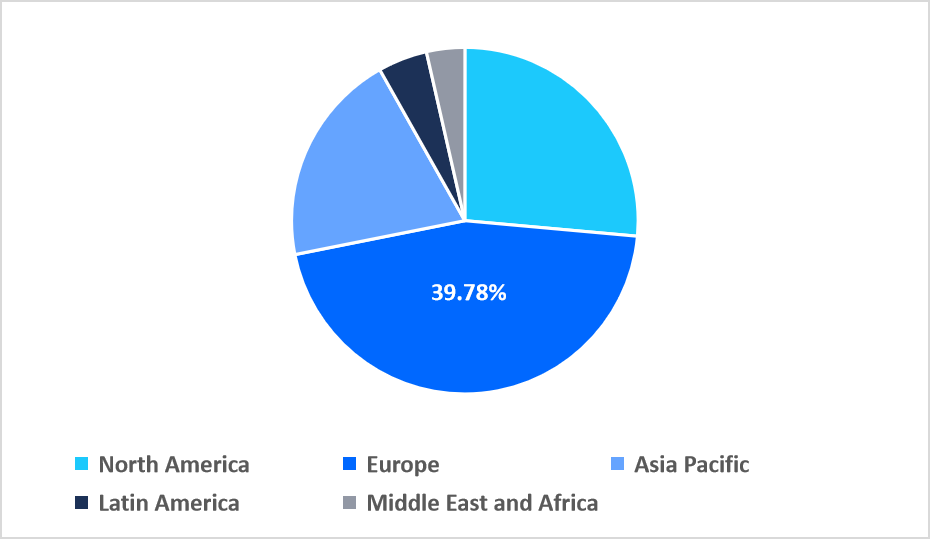
- Europe dominated the market with a revenue share of 39.78% in 2025.
- Asia Pacific is the fastest-growing region, reflecting a CAGR of 12.51% during the forecast period.
- By procedure, the artificial insemination segment is projected to register a CAGR of 12.16% during the forecast period.
- The instruments and equipment segment dominated the market with a revenue share of 37.52% in 2025.
- By end user, the hospitals and other medical settings is estimated to grow at the fastest CAGR of 11.47%
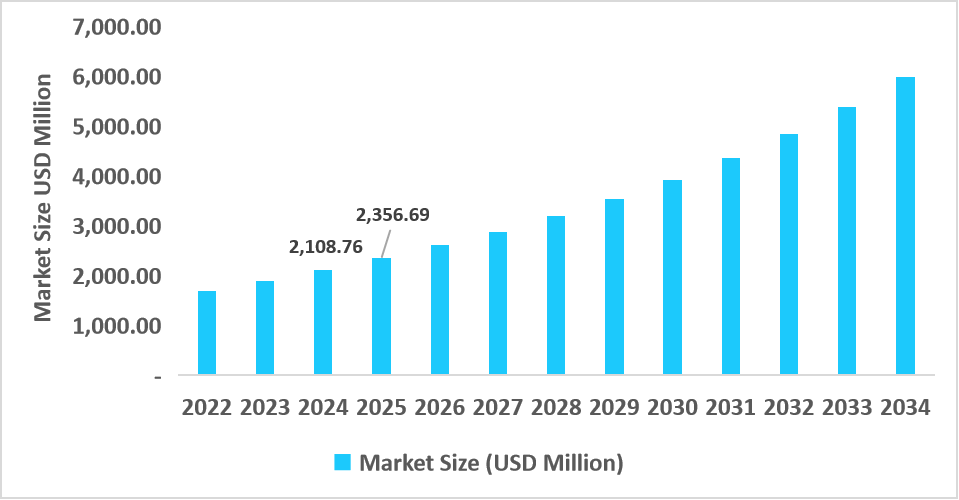
- Germany dominates the market, valued at USD 2.10 billion in 2024 and reaching USD 2.35 billion in 2025.
Table: Germany Assisted Reproductive Technology Market Size (USD Million)
Source: Straits Research
Market Size & Forecast
- 2025 Market Size: USD 31.63 billion
- 2034 Projected Market Size: USD 80.58 billion
- CAGR (2026–2034): 95%
- Dominating Region: Europe
- Fastest-Growing Region: Asia Pacific
The global market comprises a wide array of fertility procedures, including in vitro fertilization and artificial insemination. IVF is offered through service models such as fresh non-donor, frozen non-donor, fresh donor, and frozen donor cycles, while AI includes intravaginal, intrauterine, intracervical, and intratubal methods. The market also incorporates advanced technologies, including instruments and equipment, software and AI solutions, culture media, and accessories & disposables. These services are delivered through fertility clinics, specialized ART facilities, hospitals, and other medical settings, providing comprehensive, patient-centered reproductive care worldwide.

Download Free Sample Report to Get Detailed Insights.
Latest Market Trends
Use of AI in Embryo Selection
The integration of artificial intelligence in assisted reproductive technology is revolutionizing embryo selection and pregnancy success rates. AIVF’s EMA platform, an AI-based embryo evaluation system, enhanced selection accuracy by 38% and improved pregnancy probability by 70%, while reducing failed cycles by 27.5%. These AI-driven innovations reduce treatment costs, improve clinical efficiency, and increase patient trust.
Therefore, AI adoption is making ART more precise, accessible, and effective, accelerating its global market growth and acceptance.
Fertility Preservation and Tailored Treatments on the Rise
The increasing adoption of fertility preservation is emerging as a key trend in the assisted reproductive technology market. As career priorities, lifestyle choices, and medical conditions lead many to delay parenthood, procedures like egg freezing are gaining traction. In the UK, egg freezing cycles surged by 81% between 2019 and 2022.
Moreover, the use of advanced genetic screening methods such as PGT and niPGT enhances embryo selection accuracy, reduces miscarriage risks, and improves overall ART success rates.
Assisted Reproductive Technology Market Driver
Surge in the Global Infertility Rates
Infertility is increasingly recognized as a major global health issue, emerging as a key driver for the assisted reproductive technology market. According to the World Health Organization, one in six individuals worldwide faces infertility during their lifetime. The rising prevalence of lifestyle factors such as delayed marriages, obesity, polycystic ovary syndrome (PCOS), and environmental pollution is intensifying this challenge.
As a result, growing awareness and medical intervention are driving greater adoption of ART procedures across both developed and emerging regions.
Market Restraint
High cost of Assisted Reproductive Technologies
A major restraint in the global market is the high cost of treatment, which remains a key barrier to accessibility. According to the CDC, the average cost of one IVF cycle in the U.S. ranges from USD 12,000 to 25,000, while total expenses, including medications and genetic testing, can reach USD 40,000–60,000. In regions with limited insurance or employer coverage, this cost is unaffordable for many middle-income families, restricting the widespread adoption of fertility treatments and limiting market expansion globally.
Market Opportunity
Surge in Adoption of Cross-Border Reproductive Care
The growing adoption of cross-border reproductive care is creating new opportunities for the global market. Many couples are traveling internationally to access affordable and legally favorable fertility treatments. Countries such as Spain, Greece, India, and Thailand are emerging as key hubs due to advanced clinical standards and supportive regulations. This trend enables fertility providers to expand their patient base beyond domestic markets while promoting medical tourism.
Consequently, cross-border fertility travel is opening new revenue streams and strengthening global ART market growth.
Regional Analysis
Europe dominated the market with a revenue share of 39.78% in 2025. The growth is stimulated by the implementation of standardized treatment protocols and public funding for ART procedures in several European countries. These initiatives have notably increased accessibility to fertility treatments, fostering greater patient trust and adoption. Additionally, Europe's strong demand for both domestic reproductive care solidified its position as a global hub for ART services.
The UK maintains a strong ART market, boosted by NHS-funded IVF access and strict oversight from the Human Fertilisation & Embryology Authority. The UK is a pioneer in advanced practices such as mitochondrial donation and promotes safety through single embryo transfer protocols. With transparent outcome reporting and steady patient inflows from Europe.
Asia-Pacific Market Insights
Asia-Pacific is the fastest-growing region, with a projected CAGR of 12.51%. The region’s growth is fueled by rising adoption of mobile health platforms and tele-fertility services, which allow patients in remote and underserved areas to access consultations, monitor treatment progress, and receive guidance on ART procedures. By bridging geographical gaps and enhancing patient convenience, these digital innovations are expanding treatment reach and driving the regional market.
Indian ART market is growing rapidly, supported by the ART Regulation Act of 2021, which standardized clinic licensing and patient rights. Major private players such as Nova IVF Fertility, Bloom Fertility, and Indira IVF are expanding service networks to provide affordable care. Combining affordability with advanced technology, India is positioning itself as the fastest-growing country in the Asia Pacific region.
Regional Market share (%) in 2025
Source: Straits Research
North America Market Insights
North America continues to be a key region in the global assisted reproductive technology market, supported by its well-established fertility care infrastructure and extensive insurance coverage. Advanced reproductive clinics, laboratory facilities, and widespread access to financial support enable patients to pursue treatments with greater confidence. These factors collectively enhance treatment accessibility, improve success rates, and maintain North America’s leadership in the assisted reproductive technology sector.
Canada's assisted reproductive technology market is strengthened by publicly funded programs in provinces such as Ontario and Quebec. Initiatives such as the Ontario Infertility Special Assistance Fund offer financial support for IVF treatments, reducing out-of-pocket expenses for patients. This government-supported assistance improves treatment accessibility, encourages higher adoption of ART services, and supports the overall growth of the Canadian market.
Latin America Market Insights
The Latin American assisted reproductive technology market is gaining momentum due to the growing influence of medical tourism driven by affordable fertility treatments and favorable regulatory frameworks in countries like Brazil and Mexico. Patients from neighboring nations and the U.S. are increasingly traveling for cost-effective IVF and donor programs. This demand, combined with local clinic expansion, is enhancing regional market growth and positioning Latin America as a key fertility services hub.
Brazil's assisted reproductive technology market is being propelled by the increasing integration of advanced genetic screening technologies, such as preimplantation genetic testing in fertility clinics. These innovations assist in identifying healthy embryos, reduce miscarriage risks, and improving success rates, attracting more patients and enhancing the country’s position as a leading fertility treatment destination in Latin America.
Middle East and Africa Market Insights
The Middle East and Africa ART market is being driven by the rising adoption of culturally tailored fertility programs that respect local social and religious norms. Clinics in countries like the UAE and Saudi Arabia are offering customized treatment plans, including gender selection and donor anonymity options, which align with patient preferences. This culturally sensitive approach is enhancing patient trust, increasing treatment uptake, and supporting regional market growth.
Saudi Arabia’s market growth is propelled by the government’s investment in specialized fertility centers offering advanced egg and sperm preservation services. These initiatives cater to career-oriented individuals and cancer patients seeking fertility preservation, expanding access to personalized reproductive care, and positioning the country as a regional leader in innovative ART solutions.
Procedure Insights
The in vitro fertilization segment dominated the market in 2025. This growth is driven by the growing use of time-lapse imaging technology in embryo monitoring. This innovation enables continuous observation of embryo development without disturbance, improving selection accuracy, increasing implantation success rates, and reducing cycle failures, thereby enhancing overall treatment outcomes and patient confidence.
The artificial insemination segment is projected to register a CAGR of 12.16% during the forecast period, owing to the rising demand for low-cost, minimally invasive fertility solutions. Increased use of advanced sperm selection and cryopreservation techniques has enhanced procedure success rates, making artificial insemination an affordable and accessible alternative for couples seeking conception assistance.
Technology Insights
The instruments and equipment segment dominated the market with a revenue share of 37.52% in 2025. This growth is augmented by the rising adoption of automated micro manipulation and imaging systems that enhance precision during embryo handling and fertilization. These innovations improve workflow efficiency, reduce human error, and optimize IVF laboratory performance, driving market expansion.
The software and AI solutions segment is projected to grow at the fastest CAGR of 11.43% during 2026-2034, due to the increasing integration of predictive analytics platforms that assess patient-specific fertility outcomes. These advanced systems enable personalized treatment planning, optimize stimulation protocols, and enhance embryo selection accuracy, notably improving IVF success rates and clinic efficiency.
End-User Insights
The Fertility clinics and specialized ART facilities segment dominated the market in 2025. The growth is attributed rising adoption of integrated genetic counseling services within fertility centers. These facilities now provide end-to-end reproductive care, from diagnosis to genetic risk assessment, which enhances patient trust, treatment precision, and overall success rates, thereby driving segment expansion.
The hospitals and other medical settings are estimated to grow at the fastest CAGR of 11.47% owing to the increasing establishment of multidisciplinary reproductive care units within hospitals. These units combine fertility treatment with endocrinology, urology, and maternal health services, enabling patient management, improving clinical coordination, and enhancing treatment efficiency, thus fueling segment growth.
Competitive Landscape
The global Assisted Reproductive Technology market is highly fragmented due to the presence of numerous regional fertility clinics, specialized service providers, and biotechnology companies pursuing diverse growth strategies. The key players in the industry include Ferring Pharmaceuticals, Vitrolife, Hamilton Thorne, Monash IVF Group, Progyny, and others.
The industry players further intensify competition by leveraging clinic networks, offering R&D driven services such as preimplantation genetic testing, and expanding localized treatment accessibility.
CooperSurgical: An emerging market player
CooperSurgical is a major player in the ART market. It offers a comprehensive range of products and services that cover the entire ART workflow, from initial diagnostics to embryo transfer and beyond, and continues expanding through innovations in AI-assisted embryo selection and fertility consumables, strengthening its role as a vertically integrated ART provider.
- In June 2024, CooperSurgical acquired ZyMōt, a company specializing in sperm separation technology, and enhanced its product line for a critical step in the IVF process.
List of Key and Emerging Players in Assisted Reproductive Technology Market
- CooperSurgical
- Ferring Pharmaceuticals
- Hamilton Thorne
- Vitrolife
- Genea
- California Cryobank
- European Sperm Bank
- INVO Bioscience
- Monash IVF Group
- Progyny
- Microm
- OvaScience
- Bloom IVF Centre
- Virtus Health
- IVI RMA Global
- New Hope Fertility Center
- CCRM Fertility
- Sher Fertility Institute
Strategic Initiatives
- June 2025: KKR announced the acquisition of ART Fertility Clinics in India for USD 400–450 million.
- January 2025: NeoGenix Biosciences launched SpermGuide, a palm-sized microfluidic IVF device that biomimetically selects high-quality sperm, improving embryo quality by mimicking the natural reproductive tract.
Report Scope
| Market Metric | Details & Data (2025-2034) |
|---|---|
| Market Size in 2025 | USD 31.63 Billion |
| Market Size in 2026 | USD 34.71 billion |
| Market Size in 2034 | USD 80.58 billion |
| CAGR | 10.95% (2026-2034) |
| Base Year for Estimation | 2025 |
| Historical Data | 2022-2024 |
| Forecast Period | 2026-2034 |
| Study Period | 2022-2034 |
| Dominant Region | Europe |
| Fastest Growing Region | Asia Pacific |
| Key Market Players | CooperSurgical, Ferring Pharmaceuticals, Hamilton Thorne, Vitrolife, Genea |
| Report Coverage | Revenue Forecast, Competitive Landscape, Growth Factors, Environment & Regulatory Landscape and Trends |
| Segments Covered | By Procedure, By Technology, By End User |
| Geographies Covered | North America, Europe, APAC, Middle East and Africa, LATAM |
| Countries Covered | US, Canada, UK, Germany, France, Spain, Italy, Russia, Nordic, Benelux, China, Korea, Japan, India, Australia, Taiwan, South East Asia, UAE, Turkey, Saudi Arabia, South Africa, Egypt, Nigeria, Brazil, Mexico, Argentina, Chile, Colombia |
Download Free Sample Report to Get Detailed Insights.
Assisted Reproductive Technology Market Segments
By Procedure
-
In Vitro Fertilization (IVF)
- Fresh Non-Donor
- Frozen Non-Donor
- Fresh Donor
- Frozen Donor
-
Artificial Insemination (AI)
- Intravaginal (IVI)
- Intrauterine (IUI)
- Intracervical (ICI)
- Intratubal (ITI)
By Technology
- Instruments and Equipment
- Software and AI Solutions
- Accessories and Disposables
- Culture Media
By End User
- Fertility Clinics and Specialized Facilities
- Hospitals and Other Medical Settings
By Region
- North America
- Europe
- APAC
- Middle East and Africa
- LATAM
Frequently Asked Questions (FAQs)
Author's Details
Debashree B
Healthcare Lead
Debashree Bora is a Healthcare Lead with over 7 years of industry experience, specializing in Healthcare IT. She provides comprehensive market insights on digital health, electronic medical records, telehealth, and healthcare analytics. Debashree’s research supports organizations in adopting technology-driven healthcare solutions, improving patient care, and achieving operational efficiency in a rapidly transforming healthcare ecosystem.


